

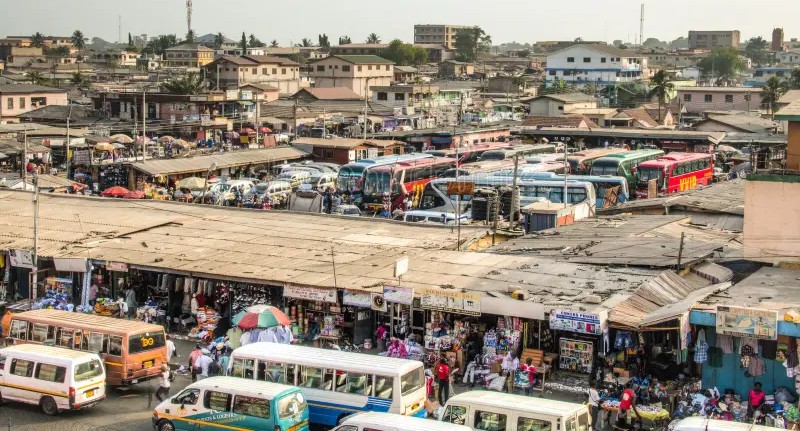
Public transport fares in Ghana will increase by 8% effective Saturday, September 26, 2026, the first official increment since a 15% decrease in May 2025.
The announcement was made by the Ghana Private Road Transport Union (GPRTU) and the Ghana Road Transport Coordinating Council (GRTCC).
Reason for Increase
The adjustment follows consultations between the Ministry of Transport and commercial transport operators from September 8 to 22, 2026. The unions cited rising ex-pump petroleum prices, spare parts, vehicle maintenance, and other operational costs. The increase also comes after some drivers began imposing arbitrary fare hikes on certain routes.
Who Is Affected
The new fares will affect shared taxis, intra-city “trotro” services, inter-city long-distance transport, and haulage services. Official data show that over 80% of urban residents rely on public transport, with 84% of passenger trips in cities made by public transport and trotros alone accounting for 70%.
New Fares
For intra-city trotros:
- GH¢5 becomes GH¢5.50
- GH¢10 becomes GH¢10.80
- GH¢15 becomes GH¢16.20
- GH¢20 becomes GH¢21.60
For shared taxis:
- Up to 1km: GH¢1.70 to GH¢1.90
- Up to 4km: GH¢2.60 to GH¢2.90
- Up to 20km: GH¢8.50 to GH¢9.20
- Up to 40km: GH¢18.70 to GH¢20.20
For inter-city:
- GH¢25 becomes GH¢27
- GH¢50 becomes GH¢54
- GH¢100 becomes GH¢108
- GH¢300 becomes GH¢324
Compliance Directive
The GPRTU and GRTCC have directed all operators to comply with the approved fares and display the revised schedules at loading terminals. Operators charging above the approved rates will face sanctions. The GPRTU says it is working with the Ministry of Transport and the Ghana Police Service to ensure compliance.
Stakeholder Reactions
A consumer advocacy group, CUTs International, said the increase was necessary for operators to meet rising costs but warned it would pressure households already struggling with the high cost of living. It called for a transparent fare-adjustment formula and government support for affordable vehicle financing and road improvements.
Some drivers said the 8% increase was lower than expected, with some having anticipated up to 30% due to rising costs. Some drivers have resorted to operating as “floating” drivers to charge higher fares, leaving stations short of vehicles.
Some passengers said they were not surprised by the increase, as drivers had already been charging higher fares on some routes.
