

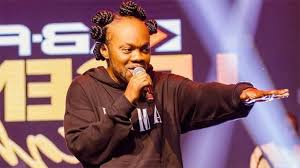
Charles Kwadwo Fosu, known to the world as Daddy Lumba, was more than an artist—he was an emotion, a memory, a cultural force. For over 35 years, he set stages on fire with his music, only to depart like the haunting fade of a final note. Tonight, the nation gathers at Independence Square for a candlelight vigil in his honor, while a book of condolence remains open at his radio station, DLFM (106.9 MHz), and his residence since last Tuesday.
Just last September, he celebrated his 60th birthday—a rare moment where he stepped out of the shadows, not with a song, but with laughter, waves, and an almost ethereal glow. Perhaps, in hindsight, it was his quiet farewell.
The stage may now stand empty, but the spotlight lingers. In 1998, Ghanaians witnessed history when Daddy Lumba, long shrouded in mystery, delivered his first-ever live performance at the Miss Ghana Beauty Pageant. Organized by Gaddy Laryea’s Media Majique and Research Systems, the event silenced skeptics who doubted his stage presence. Emmanuel Krampah, then General Manager of Media Whiz Kids, recalled how the late Kwasi Brenyah, Daddy Lumba’s manager, sealed the deal.

His elusive nature only deepened his legend, making each rare appearance feel sacred. Now, even in death, he unites people—not under concert lights, but in shared sorrow and glowing tributes.
Daddy Lumba was more than rhythm; he was poetry. His mastery of Asante Twi, woven with wit and proverbs, gave his music an unmatched depth. You didn’t always need to catch every word—you felt them.

His songs painted life in all its shades—struggle (Sika Asem, Ohia Asem), love (Se Sumye Kasa, Odo Nti), and even sensuality (Tokuro Mu, Awooso). Yet, even at his most daring, he carried an air of sophistication, never vulgarity.
He sang of faith (Mesom Jesus, Yesu Ka Yen Ho), gratitude (Theresa), and truth (Yentie Obiaa). A maestro of double meaning, tracks like Obi Ate Me So Buɔ, Biribi Gyegye Wo, and Sesee Wo Se showcased his lyrical genius.
But perhaps his most profound gift was how he confronted mortality. He didn’t fear it—he sang it into existence. Makra Mo, Yemfa Odo, Adaka Teaa—these were not just songs, but his own eulogy, written in melody long before the final curtain fell.
Daddy Lumba may be gone, but his music remains—an eternal flame in Ghana’s soul.
